
Go Goa Gone
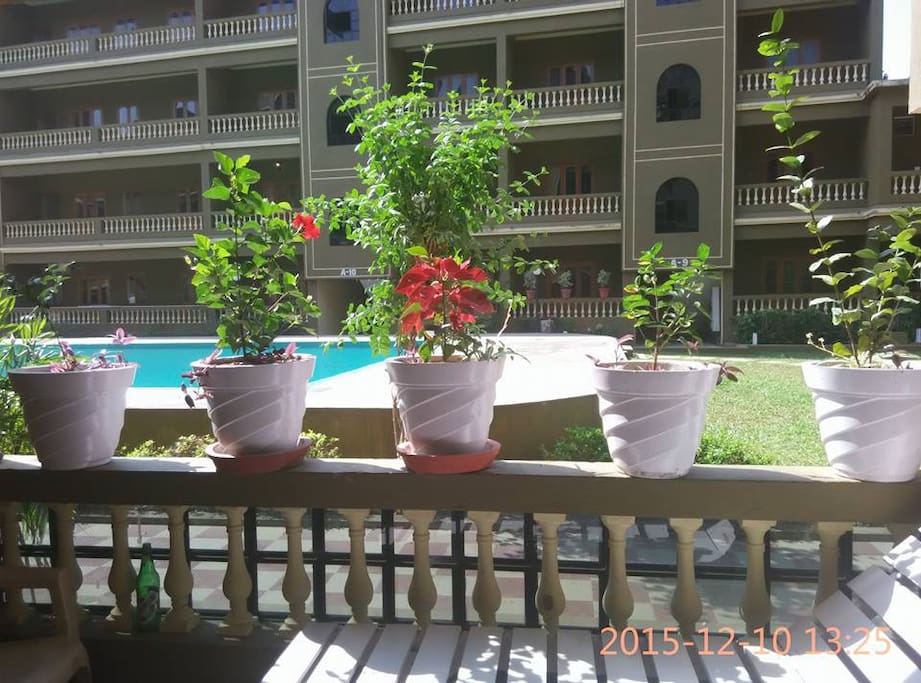
Poolside 1 BHK Apartment in Resort
Siolim, Goa, India
Serene Siolim- Gateway to the pristine beaches of North Goa at Tropical Dreams Resort with Lush green surroundings Ground Floor across the biggest swimming pool in Goa is furnished with SplitAC Ref...Vacation Rentals in Siolim
Showing posts with label Srinagar. Show all posts
Showing posts with label Srinagar. Show all posts
Sunday, September 12, 2010

Saturday, June 12, 2010
MINERAL RESOURCES in Jammu & Kashmir -Coal occurs in Poonch, Rajauri and Udhampur-gypsum in Baramula, Kathua, Leh, Poonch, Pulwama, Rajauri, Srinagar and Udhampur-Magnesite in Leh and Udhampur-bauxite, ball clay, and china clay in Udhampur
MINERAL RESOURCES in Jammu & Kashmir -Coal occurs in Poonch, Rajauri and Udhampur-gypsum in Baramula, Kathua, Leh, Poonch, Pulwama, Rajauri, Srinagar and Udhampur-Magnesite in Leh and Udhampur-bauxite, ball clay, and china clay in Udhampur
- Coal, Gypsum and Limestone are the important mineral produced in the State.
- Coal occurs in Poonch, Rajauri and Udhampur districts;
- gypsum in Baramula, Kathua, Leh, Poonch, Pulwama, Rajauri, Srinagar and Udhampur districts, and
- Magnesite in Leh and Udhampur districts. http://www.webmineral.com/data/Magnesite.shtml Magnesite is magnesium carbonate, MgCO3. Iron (as Fe2+) substitutes for magnesium (Mg) with a complete solution series with siderite, FeCO3. Calcium, manganese, cobalt, and nickel may also occur in small amounts. Dolomite, (Mg,Ca)CO3, is almost indistinguishable from magnesite. Magnesite can be used as a slag former in steelmaking furnaces, in conjunction with lime, in order to protect the magnesium oxide lining. It can also be used as a catalyst and filler in the production of synthetic rubber and in the preparation of magnesium chemicals and fertilizers. Similar to the production of lime, magnesite can be burned in the presence of charcoal to produce MgO, otherwise known as periclase. Such periclase is an important product in refractory materials. Magnesite can also be used as a binder in flooring material. In fire assay, magnesite cupels can be used for cupellation as the magnesite cupel will resist the high temperatures involved.
Other minerals that occur in the state are
 borax
borax - bauxite, ball clay, and china clay in Udhampur district;
- bentonite in Jammu district; (calcium bentonite is known as fuller's earth) -- Bentonite can be used in cement, adhesives, ceramic bodies, and cat litter. Bentonite is also used as a binding agent in the manufacture of taconite pellets as used in the steelmaking industry. Fuller's earth, an ancient dry cleaning substance, is finely ground bentonite, typically used for purifying transformer oil. Bentonite, in small percentages, is used as an ingredient in commercially designed clay bodies and ceramic glazes. Bentonite clay is also used in pyrotechnics to make end plugs and rocket engine nozzles.
- borax and sulphur in Leh district; Borax, also known as sodium borate, sodium tetraborate, or disodium tetraborate, is an important boron compound, a mineral, and a salt of boric acid. It is usually a white powder consisting of soft colorless crystals that dissolve easily in water. Borax has a wide variety of uses. It is a component of many detergents, cosmetics, and enamel glazes. It is also used to make buffer solutions in biochemistry, as a fire retardant, as an anti-fungal compound for fiberglass, as an insecticide, as a flux in metallurgy, a texturing agent in cooking, and as a precursor for other boron compounds.
- diaspore in Rajauri and Udhampur districts; If obtainable in large quantity, it would be of economic importance as a source of aluminium.
- graphite in Baramula district;
- lignite and marble in Kupwara district;
- quartz and silica sand in Anantnag district; Quartz is the second most abundant mineral in the Earth's continental crust, after feldspar. It is made up of a continuous framework of SiO4 silicon–oxygen tetrahedra, with each oxygen being shared between two tetrahedra, giving an overall formula SiO2. There are many different varieties of quartz, several of which are semi-precious gemstones. Quartz is an essential constituent of granite and other felsic igneous rocks. It is very common in sedimentary rocks such as sandstone and shale and is also present in variable amounts as an accessory mineral in most carbonate rocks. It is also a common constituent of schist, gneiss, quartzite and other metamorphic rocks. Because of its resistance to weathering it is very common in stream sediments and in residual soils. Quartz occurs in hydrothermal veins as gangue along with ore minerals. Large crystals of quartz are found in pegmatites. Well-formed crystals may reach several meters in length and weigh hundreds of kilograms.Naturally occurring quartz crystals of extremely high purity, necessary for the crucibles and other equipment used for growing silicon wafers in the semiconductor industry, are expensive and rare. A major mining location for high purity quartz is the Spruce Pine Gem Mine in Spruce Pine, North Carolina.
- and sapphire in Doda district.
Subscribe to:
Posts (Atom)